- Varicose veins treatment in Kyiv
- Varicose veins treatment in Zaporizhzhia
- Edema and lymphostasis treatment
- Myths about varicose veins
- Massage and varicose veins
- Treatment of varicose veins with hydrogen peroxide
- Veins ache and pull blood vessels
- Can I treat varicose veins with pills?
- Treatment for varicose veins with leeches and bees. Benefit or harm?
- Is it possible to get rid of varicose veins with the help of gels and ointments?
- After 70 years, is it too late to treat varicose veins?
- Do mud baths help with varicose veins?
- Is it possible to get rid of varicose veins with compression knitwear?
- If you make an "open" operation - varicose veins will never appear again. Is it so?
- Are ugly scars and scars left after the operation to remove varicose veins?
- Is varicose veins treatment a long and painful process?
- Is it possible to get rid of varicose veins completely and forever?
- Varicose veins cannot be treated in the summer. Is it so?
- Do you need to go to a surgical hospital for vein surgery or not?
- After removal of varicose veins, the load on healthy veins increases. Is this so?
- Is it possible to play sports after surgery to remove varicose veins?
- Only the elderly suffer from varicose veins?
- Wearing compression hosiery causes muscle atrophy or not?
- Remove veins or not?
- How is the outflow of blood after vein removal?
- Thrombophlebitis treatment
- Nonresident patients
- All about varicose veins
- The risk of complications of varicose veins | Trophic ulcers and no panic
- Causes and symptoms of varicose veins
- Diagnosis of varicose veins
- Stage of development of varicose veins
- Gymnastics and prevention of varicose veins
- Diet for varicose veins
- Why is varicose veins dangerous?
- Treatment of varicose veins of the lower extremities
- Varicose veins and pregnancy
- Varicose disease - what will happen if not treated?
- Varicose symptoms
- Complications of endovenous treatments
- Post-thrombotic disease
- What is phlebology?
- Complications of varicose veins
- All about sclerotherapy
- Vascular diseases
- Treatment results in AngioLife
- For doctots
- Public contract

Order a call
Erysipelas - a hidden threat, symptoms and treatment
09 jul 2026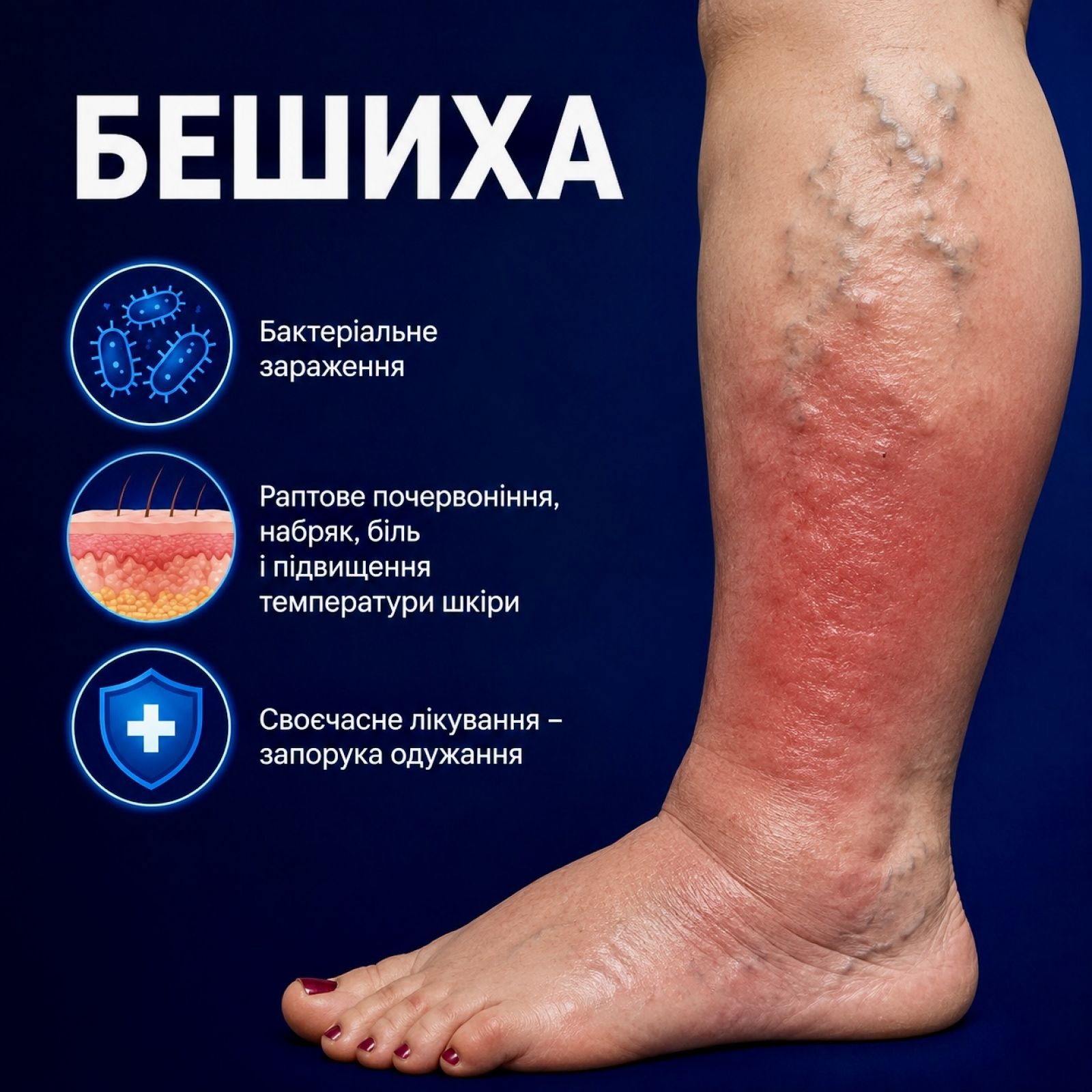
Erysipelas of the Skin: A Hidden Threat, Symptoms, and Treatment
In the list of the most unpleasant problems affecting the face, arms, and legs, erysipelas is always mentioned due to its visually unappealing manifestations and other accompanying symptoms. This infectious disease can not only have an aesthetically off-putting appearance but can also be accompanied by acute pain in the inflamed areas, high fever, and can trigger elephantiasis and sepsis.
The "AngioLife" Medical Center recommends seeking immediate assistance from our specialists upon detecting symptoms of such an ailment. Highly qualified doctors will quickly determine the causes of this pathology, provide recommendations for effective treatment, and guide you through preventive procedures.
What is Erysipelas?
It is an acute infectious disease capable of rapidly affecting the upper layers of the skin, dermis, fatty layer, lymphatic vessels, and subcutaneous tissue. The course of the disease is accompanied by the formation and reproduction of pyogenic streptococci.
Just a couple of days after infection, the symptoms of erysipelas can be noticed on certain areas of the skin in the form of red spots. In the affected areas, the skin can be compared to dry and thin parchment. Visually noticeable signs are complemented by general symptoms, such as a feeling of weakness, recurrent nausea, acute itching, and an increase in body temperature. In some cases, dizziness is observed.
Professionally administered treatment, provided there is a timely visit to the doctor, allows for the elimination of all signs of the disease in just a couple of weeks. It should be understood that delaying a visit to a medical institution and starting therapy late are fraught with very serious consequences.
Causes of Erysipelas
The main factor for such inflammation is a streptococcal infection of the skin, fatty layer, and cellular tissue. Under normal conditions of our body's immune system, microflora containing pathogens does not cause diseases. However, a decrease in immunity removes the protective barriers for the intensive reproduction of microorganisms. An weakened body is unable to fight this phenomenon.
The disease can be triggered by any injury or trauma to the skin, through which bacteria can enter the tissues. Analysis of a large number of pathologies shows that erysipelas often occurs in areas where stagnant processes are observed. The risk of disease is much higher in patients diagnosed with varicose veins and a number of other pathologies accompanied by swelling of the lower extremities.
Symptoms of Erysipelas
In many ways, the initial stage resembles the symptoms of general intoxication. This manifests as nausea, dizziness, and general weakness. In almost all cases, an elevated temperature is noted. All the listed symptoms occur within the first day after infection.
There is also a certain discomfort in the affected area. A common mistake is the initial assumption that these are the consequences of varicose veins. Dry erysipelas is accompanied by a sensation of painful tightness of the skin; the surface is constantly itchy and irritated.
What does erysipelas look like on a leg? Externally, this focus of inflammation is often compared to tongues of flame. Another nuance is that the temperature of the inflamed area is always higher than the average body temperature. The slightest contact or touch to such a spot is accompanied by acute pain.
What are the Forms of Erysipelas?
Based on the severity and form, erysipelas on the legs or face can be of several types:
- Erythematous form: This common form usually looks like a red spot with clearly defined, often jagged edges. Painful tension and thinning of the skin are observed in the inflammation zone. Swelling may form as the spot rises above the level of healthy skin.
- Erythematous-hemorrhagic type: This inflammation develops from the first form within 1 to 3 days after the onset of the disease. It is accompanied by subcutaneous hemorrhage over a fairly extensive area.
- Erythematous-bullous format: This is observed within 2 to 5 days after infection. This pathology is characterized by the formation of blisters due to the separation of the epidermis from the dermis. Any damage to the blister leads to an intensive release of exudate. The resulting wound serves as an ideal environment for an unpleasant formation known as erosion. If undamaged, the blister dries up, forming a light brown crust in its place.
- Bullous-hemorrhagic form: This represents a further progression, where damaged blood vessels fill with exudate. Parallelly, hemorrhages form under the skin. The filled, dark bullae are highly dense due to the presence of fibrin fluid inside them. Spontaneous rupture occurs in rare cases. If it does happen, the painful area becomes covered by a brown crust, and the eroded areas eventually become overgrown with a layer of epithelium. In situations with internal skin hemorrhage, there is a significant risk of necrosis and dangerous suppuration. This form of erysipelas is fraught with consequences such as leg ulcers.
The 1st and 3rd types of erysipelas are diagnosed on average in 5% of all cases of this disease. Erythematous-hemorrhagic erysipelas of the shins and feet accounts for about 50% of all cases, while the 4th format accounts for 45%.
Forms of the Disease by Local Symptoms, Severity, and General Manifestations
The symptoms for each type of severity can look as follows:
- Mild form: This involves minor intoxication, a slight increase in temperature, and localized inflammation.
- Moderate form: This pathology is accompanied by headaches, weakness, nausea, and vomiting. Body temperature can spike up to 40°C. In some cases, a drop in blood pressure and signs of tachycardia are observed. The skin lesion can spread to new areas.
- Severe form: This type of erysipelas is dangerous due to manifestations of critically high temperature, chills, shortness of breath, and acute headache. In many cases, this leads to confusion and seizures. Another unpleasant point is that improper or delayed treatment triggers respiratory or heart failure.
According to the characteristics of localization, the following forms of this disease are distinguished:
- Erysipelas of the legs and feet: This type of pathology accounts for about 70% of the total number of cases. Visually, the signs of the disease include large blisters on the lower extremities, indicating a hemorrhagic lesion. Skin defects, such as erosions, appear over time in place of the blisters. The localization of this type usually promotes pathological processes in the subcutaneous lymph nodes. Treating erysipelas on the legs is necessary to prevent relapses—stagnant phenomena in the lymphatic vessels and the appearance of venous insufficiency. This form of pathology is more common in adults.
- Facial inflammation: In such cases, the risk of relapse is practically non-existent. A timely diagnosis and qualified treatment guarantee a quick and complete cure. In children, facial erysipelas is often a consequence of tonsillitis, tooth decay, middle ear inflammation (otitis), or various viral diseases.
- Erysipelas of the arms: This is a rather rare pathology, recorded on average in 5% of the total number of cases. The cause can be the consequences of breast surgery or postoperative lymphatic edema. Erysipelas on the arms is often accompanied by dangerous relapses and complications.
Consequences of Improper Treatment of Erysipelas
Potential complications resulting from erysipelas can lead to major problems. During the acute development of the disease, this pathological process can be accompanied by:
- Impact on the subcutaneous tissue with the formation of purulent phlegmons;
- Cases of skin necrosis;
- Impaired lymph flow;
- Development of elephantiasis;
- Sepsis as a secondary infection.
Milder consequences include skin scarring and visually unpleasant formations in places where the blisters were located.
What is the Connection Between Erysipelas and Varicose Veins?
There is a clear correlation between erysipelas and varicose vein disease. Due to the disruption of vein valves in the legs caused by varicose veins, problems with reverse blood flow begin. This almost always leads to trophic disorders observed in the lower part of the legs, creating an increased risk of infection and conditions for the development of erysipelas.
Specialists have noted the following features:
- Erysipelas is diagnosed much more frequently in advanced stages of varicose veins.
- Vein thrombosis in most cases leads to relapses of erysipelas.
- In all cases involving erysipelas, a complication of trophic disorders is observed. Varicose veins progress to more complex stages (C4 or C5).
- The negative impact of erysipelas on the lymphatic system often ends in complications such as elephantiasis and lymphedema.
With existing varicose disorders, erysipelas is significantly more difficult to treat. If the therapy for varicose veins is not addressed in parallel with the treatment of erysipelas, one may face difficulties in the course of the disease and its return.
Diagnosis of Erysipelas
A doctor can accurately diagnose and determine the severity of the disease after a thorough visual examination of the affected area and an analysis of the case history. An example would be the conclusion that erysipelas of the legs is a relapse of vascular pathology.
It is mandatory to perform analyses of exudate samples and blood tests. In a number of situations, scanning the lymphatic vessels and veins will be required to properly analyze their condition under the influence of pathological processes.
Qualified diagnosis of erysipelas helps identify the following main criteria of the disease:
- Localized areas on the face or limbs;
- Presence of intoxication symptoms;
- Lymphadenitis;
- Fever;
- Local hemorrhagic syndrome or detected erythema.
All discovered signs come together into a general clinical picture, helping to obtain the most accurate and correct diagnostic result. The doctor also differentiates the diagnosis to exclude other skin pathologies such as eczema, hematoma, abscess, and thrombophlebitis.
Proper Treatment of Erysipelas
The main task of the treatment process is the intensive suppression of activity and the creation of barriers against the development of hemolytic streptococcus. The prevention of erysipelas relapses and primary care involve the use of external agents with antibacterial properties.
Furthermore, you must not lose time and should consult a doctor immediately. The treatment process most often involves the use of medications, local therapy with various antiseptic agents, and ultraviolet irradiation. With a prompt start of the course of treatment and the absence of secondary disorders, the desired result can be achieved within 14 days.
However, in the presence of complex trophic disorders, the process can become complicated—examples include venous dilations with accompanying trophic ulcers. Sometimes, surgical intervention in a hospital setting and subsequent therapy under medical supervision are unavoidable. Certain difficulties also arise in situations where erysipelas is diagnosed alongside existing lymphedema.
It is important to follow specific recommendations during the stage of relief and reduction of inflammation to prevent the reverse pathological backflow of blood through the superficial veins. Both at home and in a medical facility, one should use special dressings with antibiotic ointments and wear compression garments.
Proper nutrition during erysipelas involves a balanced menu. Try to include peaches, apples, pears, and all types of citrus fruits in your diet. It is worth mentioning that traditional methods for treating erysipelas have always included an important component: a fruit-based diet for a week. It was this approach that contributed to strengthening the immune system and the rapid healing of wounds.
However, it should be remembered that making independent decisions regarding a diet can have negative consequences. Only a consultation with a doctor will guarantee the minimization of risks such as disorders of the digestive system and intestines, or malfunctions of the pancreas.
You should not try to fight this disease exclusively at home without the involvement of a specialist. In the vast majority of cases, folk remedies can be unsafe and ineffective if you do not take a course of prescription medications, antibacterial injections, and properly selected ointments. Consulting a doctor will help avoid various complications and will guarantee the absence of relapses in the future.
Preventive Measures and Prognosis for Recovery from Erysipelas
An important nuance that allows predicting a favorable treatment outcome is that the pathogenesis of this disease is well studied. The main task is clearly defined as suppressing the activity of the pathogen and improving immunity.
Special attention to the prevention of erysipelas should be given by elderly individuals and people suffering from varicose veins, elephantiasis, or diseases of the lymphovascular apparatus.
The issue of how to avoid catching erysipelas from a patient during contact also remains highly relevant. This disease is considered contagious, and one must strictly observe sanitary and hygienic standards, as well as antiseptic rules, when treating wounds and caring for the patient.
Latest materials
- Current issues of phlebology 2026
- Leg Cramps in Pregnant Women as an Early Sign of Venous Insufficiency
- Leg Cramps During Sleep: How to Get Rid of the Problem
- ANGIOLIFE at the UVS 2026 Congress: new standards for varicose vein treatment already in Ukraine
- Swelling of the arm after breast cancer surgery
- Tumor and thrombus: a hidden connection
- Diagnosis, clinical and treatment of varicose veins
- Deep vein thrombosis
Has any questions?
Fill out the form and we will call you back!